
Producing top-quality 3D assets once required the use of technical expertise along with artistic skills and significant time. Designers were required to manually create sculpts and apply textures, alter lighting and make files suitable for different platforms. Artificial intelligence is revolutionizing this process. With the modern tools that are powered by AI for 3D modeling, creators can make detailed designs quickly usually starting with nothing more than a text prompt or a simple photo.
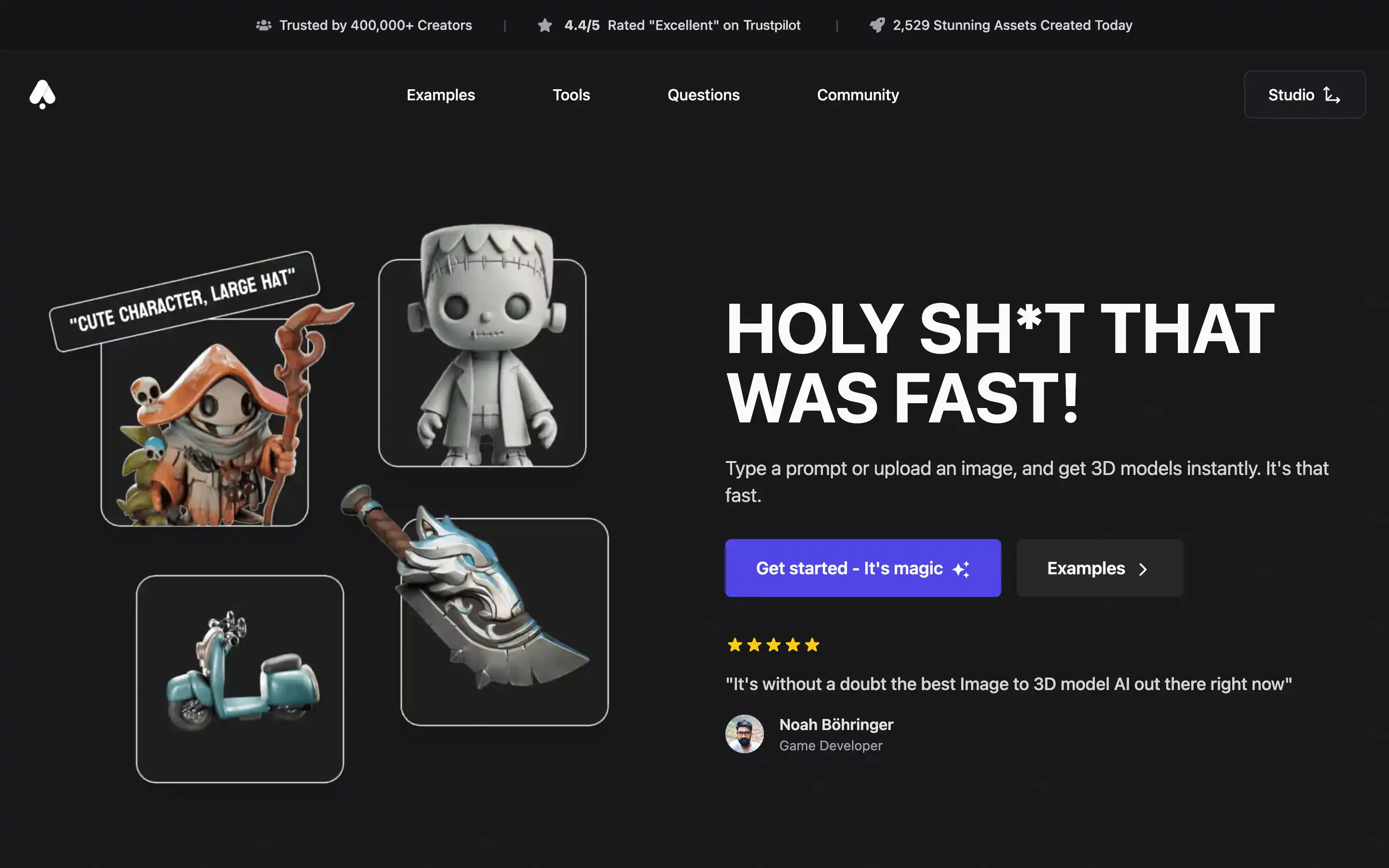
This will make 3D design accessible to experts and novices, allowing for more rapid production and creative exploration.
In Minutes, you can change an image into an 3D model
The 3D image technology is an innovation in this area. Artificial intelligence utilizes an image to detect shapes and depths. Then, it reconstructs the 3D model.
This feature is especially beneficial for industries that are dependent on speed and visual accuracy. Game developers can prototype quickly while architects can visualize their building before construction begins, and product designers are able test ideas without requiring lengthy modeling sessions. Even marketers and educators are discovering the value of turning conceptual ideas into interactive 3D-based content.
The savings in time are considerable. It’s now possible to complete what would have taken days of modeling, texture, and optimization in only a fraction of that time. This allows teams to have more time to refine ideas, rather than creating every part by hand.
What’s the reason? AI 3D Model Creation Is becoming more popular
AI 3D modeling tools are getting more popular due to their ability to simplify workflows. Artificial intelligence systems built on massive datasets are able to produce realistic shapes and materials that are consistent and accurate.
This speed doesn’t just increase productivity, but also stimulates creativity. Designers can test numerous variations of a concept in a short period of time frame, and then compare their results, and finally choose the most effective solution. This rapid iteration process is becoming essential in industries such as film production, advertising, and e-commerce visualisation.
Accessibility is a further advantage. Modern platforms allow people to develop professional-quality content even if they have little or no 3D experience.
Easy integration into Professional Workflows
Professionals, the compatibility of their software is just as crucial as speed. Modern AI platforms that support 3D models have been developed to seamlessly integrate with existing pipelines. The models can be exported into various formats that are supported by the industry, including FBX as well as OBJ. They are also compatible with rendering software and 3D printing systems.
The organization of asset libraries plays a key role in efficient production. It is easier to keep projects in order and manageable when all generated models are contained in a searchable library. Filtering models by tags as well as downloading large quantities of files and gaining access to previous versions of models can help save hours of administrative time.
Privacy and security functions have also become standard. This lets creators protect their generated assets ready to be used immediately in creative or commercial projects.
AI Tools to Control and Improve Precision
A common misconception is that automation removes control, but modern AI for 3D modeling tools often include detailed adjustment features. Users can define pivot points as well as set precise measurements to ensure that objects are properly placed in the scene. These features are crucial for animation, simulation and architectural visualization, where accuracy is essential.
Artificial Intelligence also aids in the creation of textures, allowing creators to create realistic designs quickly. This reduces the requirement to manually paint while maintaining high-end quality appearance.
Looking Forward: The Future of 3D Model AI
As AI continues to advance, 3D models AI will offer more possibilities. Advanced AI systems might be able to create whole environments, optimize assets automatically and adapt models to different platforms with no additional steps.
Platforms that are specifically designed to serve this purpose are showing how effective the tools they are. 3D AI Studio the ultimate studio for 3D assets reflects this new generation of software designed to ease creation, speed up workflows, and aid creators move from idea to finished model in a short amount of time.
Conclusion
The ability to transform conceptualization to an end-to-end product quickly has transformed the way that digital content is produced. With image to 3D model technology and modern AI 3D model tools, creators do not have to be restricted by slow, manual workflows.
These technologies will continue to advance and will play a greater role in sectors such as entertainment, gaming engineering, education, and more. They will enable high-quality 3D production more efficient, better and more affordable.